Grammar and Vocabulary (Obligatorio)
| Sitio: | 'ELE' Plataforma Educativa Chaqueña |
| Área temática: | 2do. 3ra. |
| Libro: | Grammar and Vocabulary (Obligatorio) |
| Imprimido por: | Invitado |
| Día: | lunes, 6 de abril de 2026, 09:17 |
Descripción
Leer las siguientes paginas y hacer los ejercicios
Temas:
- Numbers
- ABC
- Personal pronouns
- Articles
- Verb To Be
Numbers
NUMBERS IN ENGLISH
Cardinal numbers (one, two, three, etc.) are adjectives referring to quantity, and the
ordinal numbers (first, second, third, etc.) refer to distribution
| Number | Cardinal | Ordinal | In numbers |
| 1 | one | First | 1st |
| 2 | two | second | 2nd |
| 3 | three | third | 3rd |
| 4 | four | fourth | 4th |
| 5 | five | fifth | 5th |
| 6 | six | sixth | 6th |
| 7 | seven | seventh | 7th |
| 8 | eight | eighth | 8th |
| 9 | nine | ninth | 9th |
| 10 | ten | tenth | 10th |
| 11 | eleven | eleventh | 11th |
| 12 | twelve | twelfth | 12th |
| 13 | thirteen | thirteenth | 13th |
| 14 | fourteen | fourteenth | 14th |
| 15 | fifteen | fifteenth | 15th |
| 16 | sixteen | sixteenth | 16th |
| 17 | seventeen | seventeenth | 17th |
| 18 | eighteen | eighteenth | 18th |
| 19 | nineteen | nineteenth | 19th |
| 20 | twenty | twentieth | 20th |
| 21 | twenty-one | twenty-first | 21st |
| 22 | twenty-two | twenty-second | 22nd |
| 23 | twenty-three | twenty-third | 23rd |
| 24 | twenty-four | twenty-fourth | 24th |
| 25 | twenty-five | twenty-fifth | 25th |
| 26 | twenty-six | twenty-sixth | 26th |
| 27 | twenty-seven | twenty-seventh | 27th |
| 28 | twenty-eight | twenty-eighth | 28th |
| 29 | twenty-nine | twenty-ninth | 29th |
| 30 | thirty | thirtieth | 30th |
| 31 | thirty-one | thirty-first | 31st |
| 40 | forty | fortieth | 40th |
| 50 | fifty | fiftieth | 50th |
| 60 | sixty | sixtieth | 60th |
| 70 | seventy | seventieth | 70th |
| 80 | eighty | eightieth | 80th |
| 90 | ninety | ninetieth | 90th |
| 100 | one hundred | hundredth | 100th |
| 500 | five hundred | five hundredth | 500th |
| 1,000 | One/ a thousand | thousandth | 1000th |
| 1,500 | one thousand five hundred, or fifteen hundred | one thousand five hundredth | 1500th |
| 100,000 | one hundred thousand | hundred thousandth | 100,000th |
| 1,000,000 | one million | millionth | 1,000,000 |
HACER LOS SIGUIENTES EJERCICIOS:
Personal Pronouns
Subject Pronouns
Pronombres con función de sujeto
Los pronombres con función de sujeto se utilizan para reemplazar a un sustantivo (nombre). En español los pronombres con función de sujeto normalmente se omiten ya que el verbo conjugado denota el sujeto utilizado.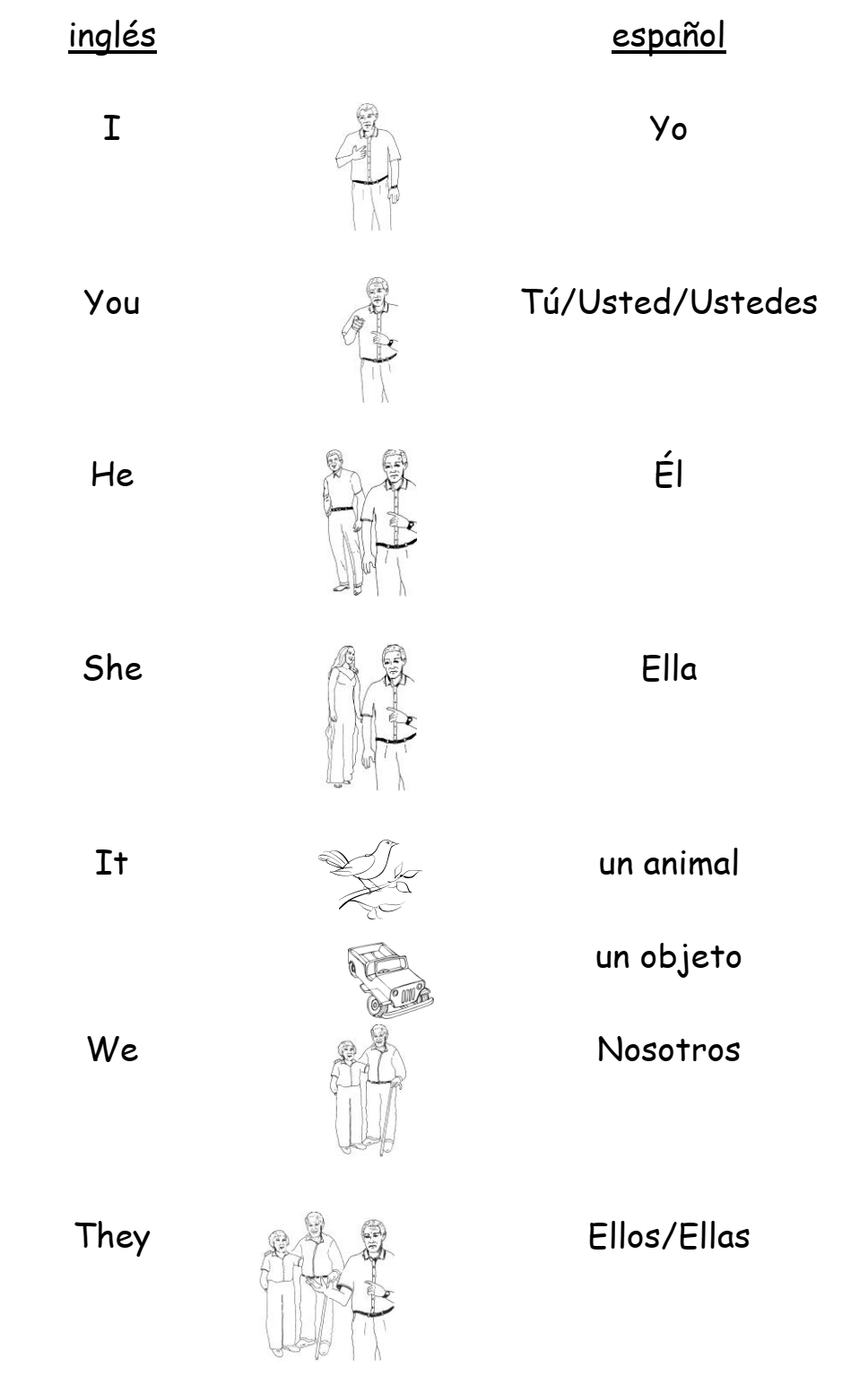
- Ejercicios:
Link 1
Link 2
Verb TO BE - Positive
Be (am, is, are)
Formas del verbo Be (am, is, are)
El verbo be se utiliza para expresar identidad y ubicación (lugar).Tiene tres formas diferentes (am, is, are).
En español el verbo be se traduce por los verbos ser o estar.
Positive
| I am | Yo soy/Yo estoy | We are | Nosotros/as somos Nosotros/as estamos |
| You are | Tú eres/Tú estás Usted es Usted está | You are | Ustedes son Ustedes están |
| He is She is It is | Él es/ Él está Ella es/ Ella está El pájaro es/está | They are | Ellos/ellas son Ellos/ellas están |
Contractions
Contracciones (formas apocopadas)
En inglés se utiliza un apóstrofe (‘) para unir el pronombre con el
verbo.
En español no existen contracciones con el verbo be.
| I’m | Yo soy/Yo estoy | We’re | Nosotros/as somos Nosotros/as estamos |
| You’re | Tú eres/Tú estás Usted es Usted está | You’re | Ustedes son Ustedes están |
| He’s She’s It’s | Él es/ Él está Ella es/ Ella está El pájaro es/está | They’re | Ellos/ellas son Ellos/ellas están |
Verb TO BE - Negative
Negative
Formas negativas
En inglés se utiliza not después del verbo be (am, is, are) paraformar una oración negativa.
En español la palabra no se coloca delante del verbo.
| I am not | Yo no soy Yo no estoy | We are not | Nosotros/as no somos Nosotros/as no estamos |
| You are not | Tú no eres Tú no estás Usted no es Usted no está | You are not | Ustedes no son Ustedes no están |
| He is not She is not It is not | Él no es Él no está Ella no es Ella no está El perro no es El perro no está | They are not | Ellos/ellas no son Ellos/ellas no están |
Examples: I am not sad. They are not sad.
Yo no estoy triste. Ellos no están tristes.
Negative Contractions
Contracciones negativas
En inglés se une el pronombre con el verbo y se añade not acontinuación.
En español las contracciones negativas no existen con el uso del
verbo be.
| I’m not | Yo no soy Yo no estoy | We’re not | Nosotros/as no somos Nosotros/as no estamos |
| You’re not | Tú no eres Tú no estás Usted no es Usted no está | You’re not | Ustedes no son Ustedes no están |
| He’s not She’s not It’s not | Él no es Él no está Ella no es Ella no está El pájaro no es El pájaro no está | They’re not | Ellos/ellas no son Ellos/ellas no están |
Verb To be - Questions
Questions
Preguntas con el verbo be
Para formar preguntas en inglés se coloca la forma correcta del verbo be (am, is,are) al principio de la oración seguida del sujeto y se pone solamente un signo de
interrogación (?) al final de la oración.
En español la forma correcta de ser o estar se coloca al principio de la oración
y se pone dos signos de interrogación; al principio de la oración en forma invertida
(¿) y al final de la oración (?).
| They are married. | They are married. | Are they married? |
| Are they married? | Yes, they are married. (Sí, ellos están casados.) | |
| (¿Están casados?) | No, they are not married. (No, ellos no están casados.) |
| Am I married? | ¿Estoy casado/a? | Are we married? | ¿Estamos casados? |
| Are you married? | ¿Estás casado/a? ¿Está casado/a? | Are you married? | ¿Están casados? |
| Is he married? Is she married? Is it a book? | ¿Está casado? ¿Está casada? ¿Es un libro? |
Mira el siguiente video para mas detalles: